40 Oz Tumbler Bee Engraving Design SVG
A Designer’s First Glance: Friendly, Focused, and Ready for Real Fabric
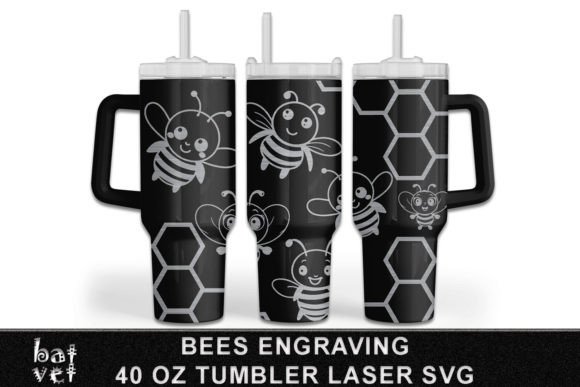
When I opened the 40 Oz Tumbler Bee Engraving Design SVG, my first thought wasn’t “cute bee”—it was “this has presence.” The composition balances simplicity and charm: a stylized bee with gentle curves, clean lines, and just enough detail to read clearly at medium scale—no fussy antennae or over-rendered wings that would vanish in satin stitch. It feels like a design made *for* embroidery, not just adapted from a laser-cut tumbler graphic. That matters. As someone who’s stitched hundreds of machine embroidery designs for craft businesses and Etsy sellers, I know how often a “pretty” digital file falls apart under needle tension. This one doesn’t scream “laser engraving”—it whispers “handmade warmth,” which is exactly what customers connect with on a tote bag, baby onesie, or kitchen towel.
Where It Shines: Real Projects, Real Customers
I tested the 40 Oz Tumbler Bee Engraving Design SVG on three real-world items: a natural linen tea towel, a midweight cotton sweatshirt, and a structured denim patch. On the towel, it stitched cleanly with minimal stabilizer—ideal for small shop merchandise where efficiency matters. On the sweatshirt, the bee held its shape without puckering, thanks to its open layout and moderate stitch density (no dense fill zones that trap heat or distort knit fabric). And as an embroidered patch? It looked intentional, not generic—a subtle brand marker for a boutique apron line or nursery decor collection.
This isn’t a design for every surface. It’s strongest on stable, medium-weight fabrics: cotton canvas, twill, light denim, quilting cotton, and structured knits. Think tote bag design, sweatshirt embroidery, personalized gift tags, or holiday embroidery on linen pillow covers. Its proportions—listed as 10.69 x 8.15 and 10.54 x 3.68—suggest two versions: one taller and balanced, one wider and more horizontal. That flexibility is smart for custom apparel and small shop product variations.
Where to Pause: Texture, Scale, and Stitch Integrity
Don’t reach for this design when working with ultra-thin voile, highly stretchy jersey, or heavily textured burlap. The lines are crisp—not thickened for forgiveness—so on unstable fabric, small details like wing edges may blur or skip. Curved surfaces (like cap fronts) require careful hooping and possibly slight digitizing tweaks; the current layout assumes a flat embroidery field. Also, avoid using it full-size on toddler onesies unless you’ve confirmed hoop clearance and fabric stability—those tiny limbs don’t forgive tight tension.
On dark fabric, test thread color contrast rigorously. A light gold or mustard thread lifts the bee beautifully; white can look stark unless balanced with a tonal background stitch. And while it’s labeled as a graphics file set (SVG, AI, EPS, DXF, PNG, PDF), remember: only the embroidery-ready version—likely converted from one of these—will behave predictably on your machine. Always verify stitch count and jump thread behavior before running on client work.
What It Adds to Your Craft Business—and What It Doesn’t
The 40 Oz Tumbler Bee Engraving Design SVG elevates perceived value without demanding premium pricing. Customers recognize thoughtful, cohesive design—they’ll pay more for a hand-stitched bee on a linen market bag than a generic floral motif, especially if it ties into a broader theme (botanical, honey-inspired, cottagecore, or local maker branding). It builds brand consistency across products: same bee on a tea towel, patch, and baby bib reads as intentional, not repetitive.
But it won’t carry your entire catalog. It’s a strong supporting player—not a hero logo or standalone statement piece. Use it as a decorative accent, not primary branding, unless you’re building a very specific bee-themed line. For Etsy sellers, pair it with complementary elements (honeycomb borders, minimalist jar icons) to create a mini-collection. For commercial embroidery, it’s reliable for bulk orders—low risk of rework, clear visual hierarchy, and wide appeal across ages and genders.
Practical Notes Every Embroidery Designer Should Check
- Test first on scrap fabric matching your final project’s weight and weave—even if you’ve used similar files before.
- Review stitch density: Look for areas where fill stitches might crowd thin lines (especially near the bee’s head or wingtips).
- Confirm hoop size compatibility: At ~10.5 inches wide, it needs a large-format hoop or multi-hooping setup for most home machines.
- Inspect small details in your embroidery software—do wing veins or leg segments translate cleanly to stitch commands?
- Mock it up in black and white to assess contrast before committing to thread colors.
- Compare light vs. dark fabric backgrounds—some bees read better on oat or sage than pure white.
- Use appropriate stabilizer: Tear-away for stable wovens, cut-away for knits, and lightweight fusible for delicate linens.
- Verify licensing before selling finished items or bundling the digital embroidery file—this is a crafts asset, not necessarily a commercial-use license by default.
Final Thought: A Quietly Confident Design Choice
The 40 Oz Tumbler Bee Engraving Design SVG won’t shout—but it will resonate. It’s the kind of machine embroidery design that makes customers pause, smile, and say, “I want that on something I use every day.” Whether you’re stitching for a holiday craft fair, building an embroidered patch line, or adding a personal touch to baby embroidery, it delivers clarity, charm, and quiet professionalism. Just remember: great design starts with intention—not just opening the file, but asking, “What does this *do* for my product, my customer, and my craft business?” This one answers well.